
11/03/2026, 08:00
| Blog
Most reservoirs in Valais are full, while Graubünden and Ticino are facing a water shortage. As winter approaches, there are marked differences between regions with glaciers and those without. This situation highlights the need to prepare for increasingly variable water inflows – between seasons, from one year to the next and from one catchment area to another. In particular, this calls for the expansion of hydropower and additional capacity to store water when it is available, so that electricity can be generated when Switzerland needs it.
2026 was a year of low precipitation. However, reservoir levels did not develop in the same way everywhere. In Valais, glacier-fed catchment areas benefited from substantial meltwater inflows. The Grande Dixence, Emosson and Moiry reservoirs were therefore full when the cold weather arrived at the end of October. By contrast, the Salanfe reservoir, whose catchment area is now barely glaciated, has a low fill level. The water deficit remains pronounced in Graubünden and Ticino.
These contrasts should not obscure a fundamental trend. Although glacier melt supported inflows this summer, it is drawing on an ice reserve built up over centuries. As the glaciers retreat, their function as natural reservoirs will diminish. We will therefore need to manage water inflows that vary more from season to season and between catchment areas. “Larger volumes of water may arrive over short periods, particularly in spring or during heavy rainfall. At the same time, summer inflows will become less reliable. Without sufficient capacity, some of this water cannot be stored for winter,” says Michaël Plaschy, Head of Hydropower Generation at Alpiq.

Gebidem reservoir
Storing more water to generate electricity in winter
The conclusion is clear: raising the Moiry and Emosson dams could create additional reserves for winter. Above Zermatt, the Gornerli multi-purpose reservoir project pursues a complementary objective: to capture and store more of the Gornera’s water so that it can be used in the Grande Dixence facilities. At the same time, the reservoir is intended to protect Zermatt and the Matter Valley from flooding and to provide water reserves for other uses.
“The contrasts observed this summer show why we are developing these projects. Climate change will make water inflows more variable. We therefore need to store water when it is available so that we can generate electricity when demand is highest, particularly in winter,” says Michaël Plaschy.
These projects cannot compensate for the retreat of the glaciers. They do, however, make it possible to manage the available water resource more effectively over time. The current situation also confirms the importance of integrated, multifunctional water management. This takes account of electricity generation, drinking water supply, irrigation, flood protection and environmental needs at the same time.

Gougra reservoir
Gebidem and Gornera: water that could not be used
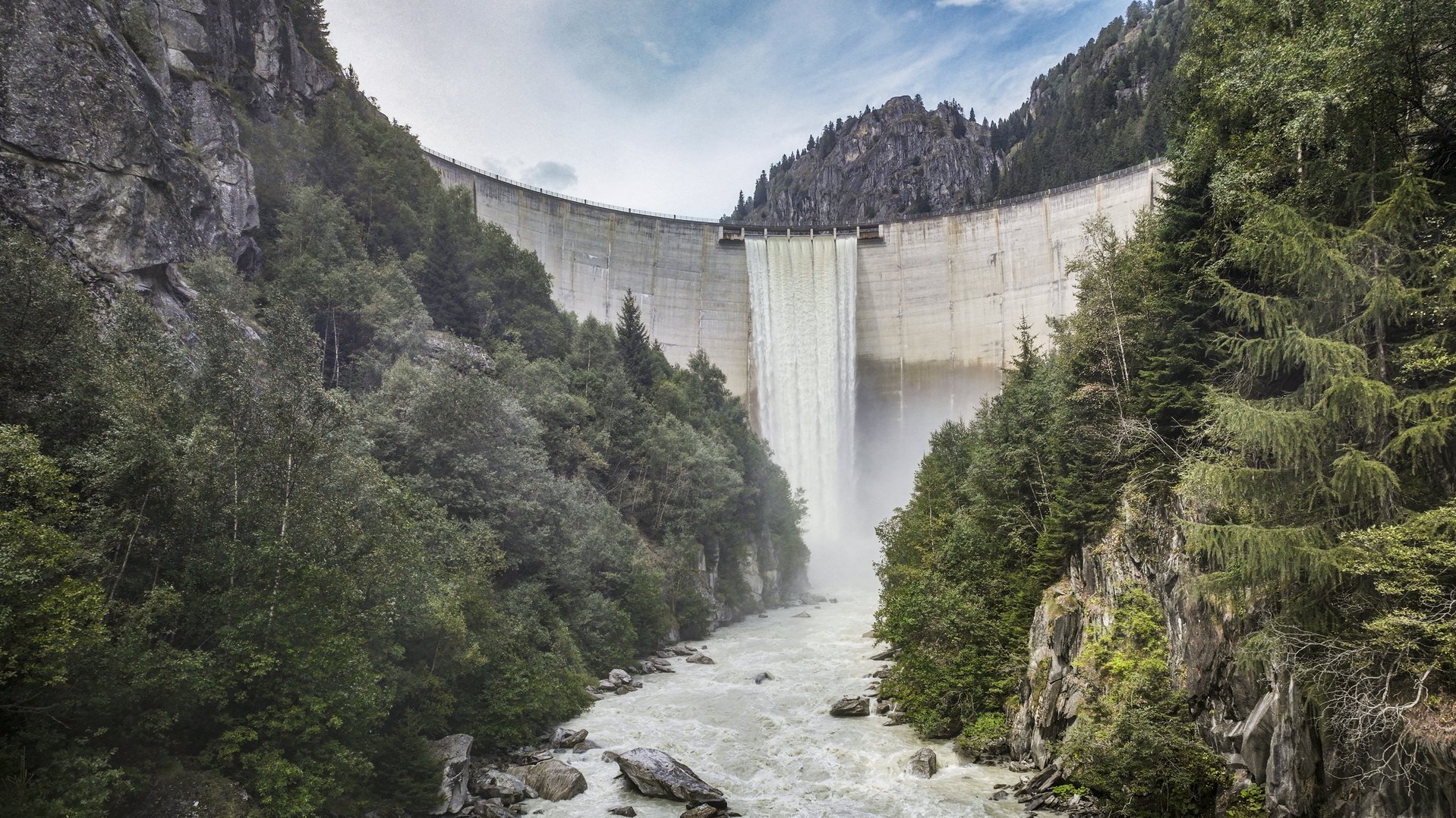
The Gebidem reservoir in Upper Valais is comparatively small and is fed by the large Aletsch Glacier. Water inflows reached a record level of just over 130 m³/s, which was also reflected in production. Nevertheless, not all the water could be used – the overflow recorded in 2026 represents 20 GWh of lost generation potential. This unused potential is lower than in some other years. However, it illustrates the large volumes of water that can arrive within a short period.
Another example can be found at Grande Dixence. At the Gornera water intake above Zermatt, almost 70% of the water could be captured, but about a third spilled – equivalent to potential electricity generation of more than 200 GWh. The future Gornerli multi-purpose reservoir, with a storage volume of 120 million m³ and a winter energy reserve of 550 GWh, would have allowed this water to be retained. The water has not disappeared. However, it could not be stored and used to generate electricity.
This winter: reserves and prudent management
Alpiq’s hydropower production in 2026 is expected to be below the long-term average. However, the lower levels of individual reservoirs do not indicate an electricity shortage this winter. The large reservoirs in Valais, which continue to be strongly fed by glaciers, hold significant reserves. These can be used when the electricity system needs them.
“Our supply is based on the entire generation portfolio and on exchanges with neighbouring countries. Our reservoirs make an essential contribution because they can generate electricity precisely when it is needed,” explains Michaël Plaschy. “However, geopolitical risks and lower gas storage levels in Europe this year could put upward pressure on market prices.”
Expanding domestic storage capacity is therefore a long-term investment. It provides greater flexibility in dealing with hydrological fluctuations and makes more energy available during the cold season.


