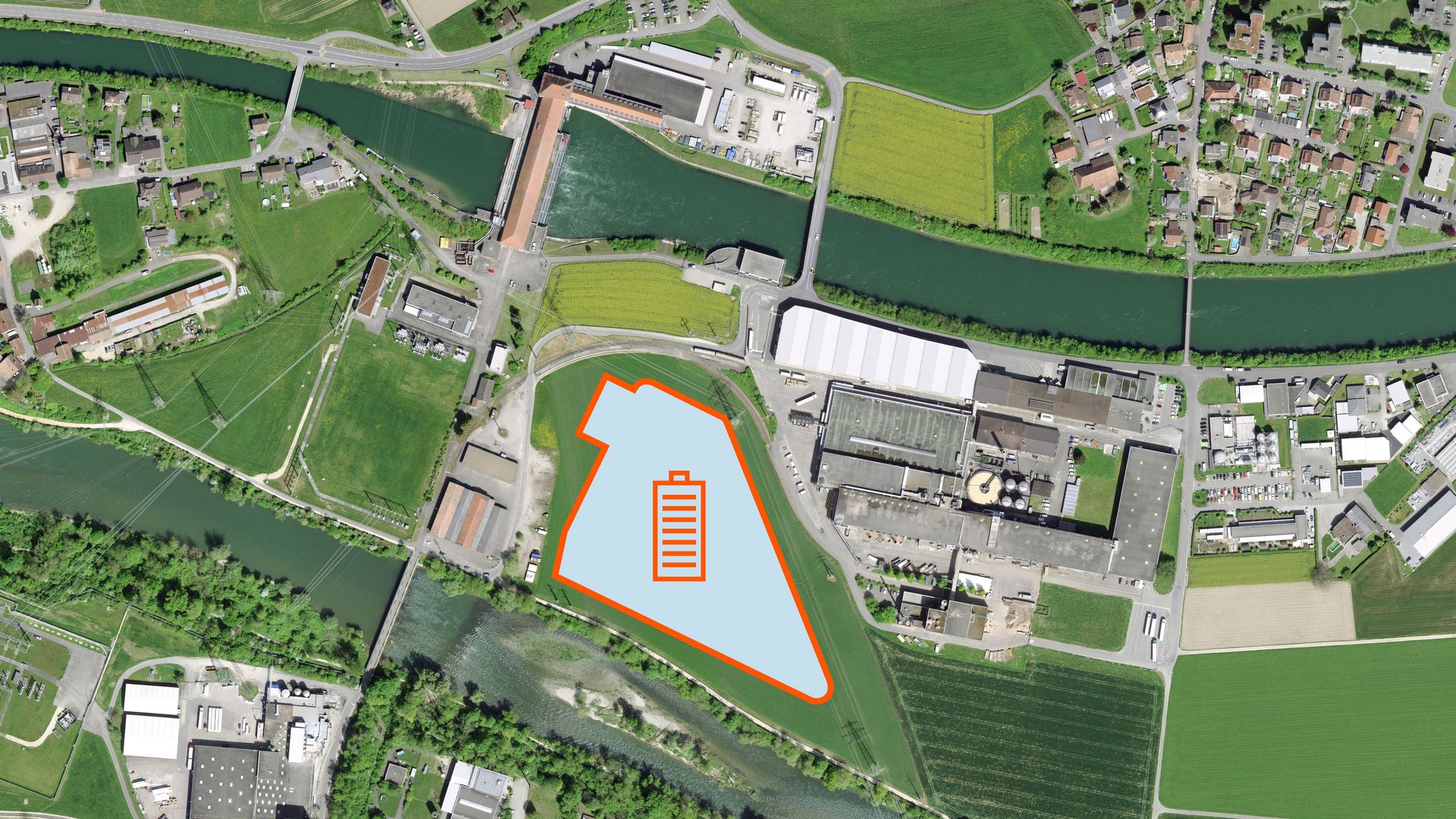
Alpiq has already successfully commissioned its first battery energy storage systems (BESS) in Finland and France. Now, the company is planning its first large-scale battery storage project in Switzerland. A 300 MW / 1,200 MWh battery is set to be built in Niedergösgen. In this interview, Amédée Murisier, Head of Assets and member of Alpiq’s Executive Board, explains why battery storage is becoming increasingly important even in Switzerland – often referred to as Europe’s “water castle” – what role the country can play in the future energy system, and what lessons Alpiq has learned from its BESS projects abroad.
Amédée Murisier, Alpiq is moving ahead with its first battery storage project in Switzerland, located in Niedergösgen. Why is this project strategically significant?
The project in Niedergösgen, in the canton of Solothurn, is very important to us because it perfectly illustrates how we see the role of BESS in Switzerland. We are planning a large-scale battery with an output of around 300 MW and a storage capacity of approximately 1,200 MWh at a key node in the Swiss transmission grid, located close to both the Gösgen nuclear power plant and the Gösgen run-of-river hydropower plant. The project is currently in the planning phase. We recently signed a framework agreement with Swissgrid covering the grid connection, which marks an important milestone. The approval process will begin shortly. Particularly in Switzerland, obtaining the necessary approvals is a decisive factor in determining whether projects like this can be realised.

Alpiq is systematically strengthening its position as a European provider of flexibility solutions.
What does this development mean for Switzerland? What role can BESS play here in the future?
Our aim is to help make the electricity system more flexible, more stable and better prepared for the integration of renewable energy. This will be essential to support, among other things, the ongoing expansion of solar power in Switzerland. Switzerland already benefits from strong existing flexibility thanks to its hydropower resources, but hydropower alone will not be sufficient. BESS can complement it perfectly, particularly by providing very short-term flexibility wherever additional storage capacity can relieve pressure on both the grid and electricity markets.
What specific benefits do BESS bring to the flexibility and stability of the Swiss electricity system?
Across many countries, flexibility has become a key success factor for the energy transition. As the share of electricity generated from solar and wind continues to grow, short-term fluctuations in both generation and prices become more pronounced. This is precisely where BESS comes into play. They can absorb electricity whenever large amounts of renewable energy are available and feed it back into the grid exactly when it is needed – for example during the evening peak or when short-term frequency deviations occur. This makes them an ideal complement to an energy system that is increasingly shaped by weather-dependent generation.
This capability is becoming more important in Switzerland as well. Solar capacity is expanding rapidly, while demand for grid-supporting and system-supporting flexibility continues to grow. As a strategically important energy hub with a direct connection to Switzerland’s transmission grid, the Niedergösgen site will also be able to contribute, to a certain extent, to stabilising north-south electricity flows.
Alpiq currently operates two BESS facilities in Finland and France. What have you learned from these projects?
Our first projects have confirmed that BESS is not only strategically important for Alpiq but also operationally and commercially attractive. In Finland, we commissioned our first fully owned battery storage system in Valkeakoski in October 2025. The facility has an output of 30 MW and a storage capacity of 36 MWh. It is a technologically remarkable project and one of the first battery systems in the Nordic region to meet the requirements for grid-forming operation. This means it can actively support the electricity grid continuously, instantaneously and without external control measures – even in the event of disturbances or grid outages. The project also marked the launch of Alpiq’s proprietary BESS Accelerator, our in-house optimisation and trading platform for BESS. Based on weather forecasts, consumption patterns and market signals, the platform continuously optimises the battery’s operation and adapts it to changing conditions.
In France, we reached another important milestone with the acquisition of the Cheviré BESS facility in Nantes. With an output of 100 MW and a storage capacity of 200 MWh, it is one of the largest operational battery storage facilities in the country. Projects like these clearly demonstrate the contribution BESS can make to grid stability and security of supply. For Alpiq, they also create value by allowing us not only to own these assets but also to further strengthen our expertise in operating, optimising and commercialising flexible energy solutions.
What is the next step in Alpiq’s growth strategy for expanding its BESS portfolio?
In a relatively short period of time, we have built up a substantial BESS portfolio, and we intend to strengthen our position even further. A clear example is Alpiq’s recent decision to acquire a majority stake in Harmony Energy, one of Europe’s leading developers and operators of BESS (for more information, see our media release). Our ambition is clear: we want to further expand our position as a leading provider of flexibility solutions in Europe and grow our BESS portfolio to a multi-gigawatt scale over the coming years. For us, success is not measured solely by the size of the project pipeline. Equally important is our ability to operate these assets efficiently and optimise them in line with market conditions.
From an investor’s perspective, what is the key message behind Alpiq’s expansion into BESS?
The key message is that Alpiq is systematically strengthening its position as a European provider of flexibility solutions. BESS is a logical next step because it complements our existing portfolio of hydropower, thermal flexibility assets and optimisation expertise perfectly. For us, this forms part of a long-term strategic direction. We are investing in a business area that benefits from powerful structural trends such as decarbonisation, electrification and the continued expansion of renewable energy. At the same time, we remain disciplined. We are only pursuing those projects that fit our core geographical markets and meet our economic return requirements.