Contact
Media Relations
T: +41 58 833 83 33
media@alpiq.com
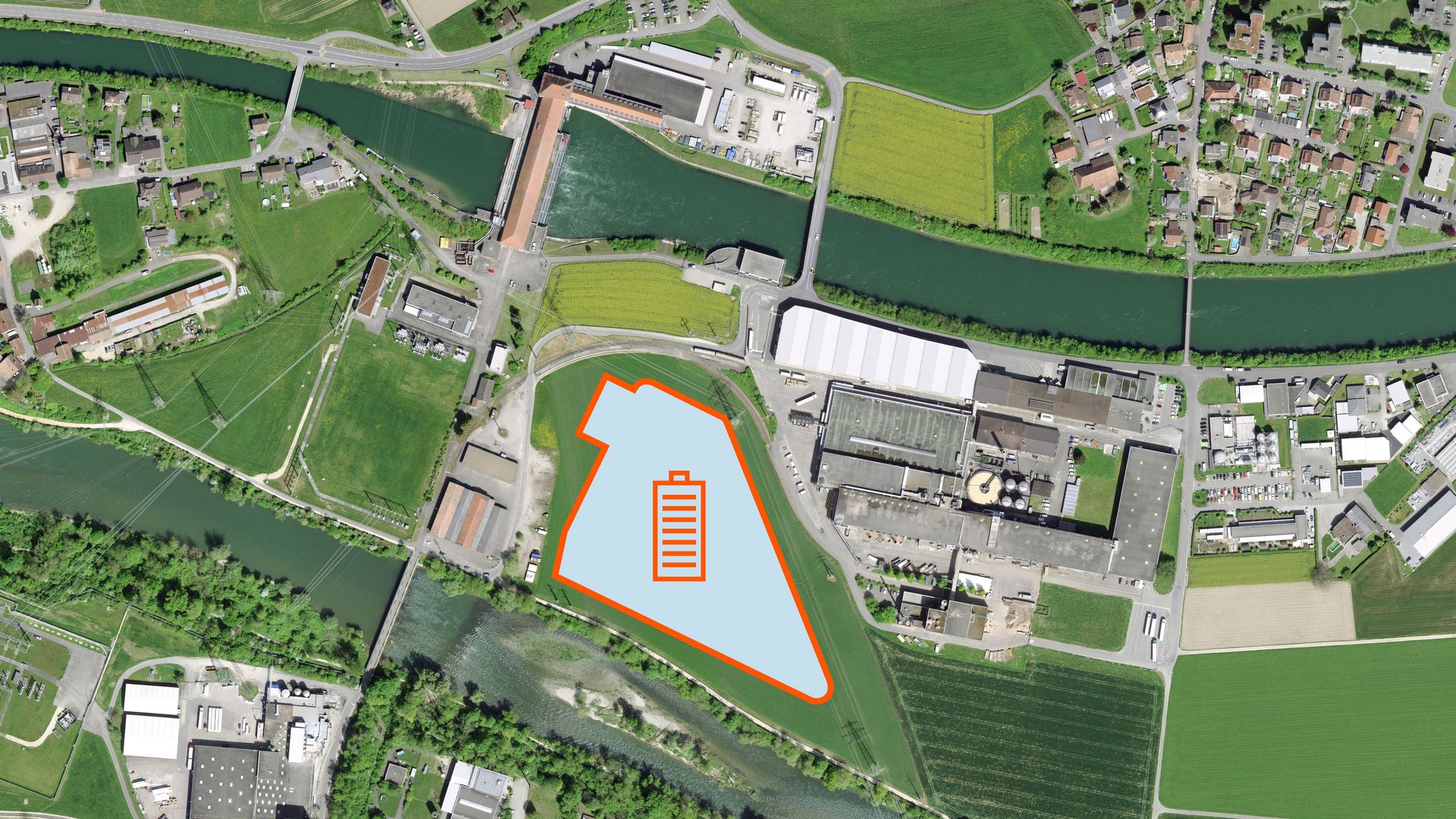
Lausanne – Energy storage solutions are key enablers of the energy system of the future. In line with its growth strategy, Alpiq is continuing to invest in flexible energy infrastructure by planning a large-scale battery in Niedergösgen (canton of Solothurn). With a capacity of 300 megawatts (MW) and a storage capacity of more than 1.2 gigawatt-hours (GWh), the battery energy storage system (BESS), which is planned next to Alpiq’s Gösgen run-of-river power plant, will be one of the largest in Switzerland. A significant milestone was reached with the signing of a pre-connection agreement with Swissgrid, securing the project’s 300 MW grid connection capacity to the national transmission grid.
Highly flexible energy storage systems – in particular pumped-storage hydropower and large-scale battery energy storage systems – integrate the rapidly growing, weather-dependent output from renewable energy sources (solar and wind) into the grid, balance short-term fluctuations and strengthen security of supply. The planned 300 MW BESS in Niedergösgen will play a key role in this context. Its proximity to key energy infrastructure, including the Gösgen nuclear power plant and Gösgen hydroelectric power plant, and its direct connection to the Swiss transmission grid at a central grid node provide ideal conditions for a project of this scale.
Thanks to its secure grid connection, 300 MW capacity and storage capacity of more than 1.2 GWh, the planned facility can make a significant contribution to relieving the load on the Swiss transmission grid and supporting the transition to a low-carbon energy system. The facility will be capable of supplying around 500,000 households with electricity for more than four hours.
The signing of the pre-connection agreement with Swissgrid for grid connection capacity marked a major milestone for the BESS project in Niedergösgen. Alpiq is now driving the project forward at full speed. Initial discussions with representatives of the relevant authorities have taken place. Maintaining a dialogue with the local community is important to Alpiq. Following the exchange of information, the planning application is expected to be submitted. Construction is scheduled to begin in 2027, with commissioning planned for 2029.
“The Niedergösgen site combines key requirements for a large-scale battery project of this magnitude: proximity to existing energy infrastructure and a connection to an important grid hub,” says Amédée Murisier, Head of the Assets business unit and member of Alpiq’s Executive Board. “This BESS project represents another milestone for Alpiq in the consistent implementation of our ambitious growth strategy. We are making targeted investments in flexibility and contributing directly to security of supply and the integration of renewable energies into the energy system.”
With the battery project in Niedergösgen, Alpiq is consolidating its role as a leading provider of flexibility solutions in Europe and reinforcing its commitment to integrating the rapidly growing volumes of renewable electricity into the energy system, thereby contributing to a sustainable energy future.
Alpiq’s power plant portfolio includes, among others, stakes in the Grande Dixence, Nant de Drance and FMHL pumped-storage power plants. At the same time, the expansion of its flexible power plant portfolio is progressing rapidly. In Spain, Alpiq is pursuing a project for a pumped-storage power plant. In the BESS segment, the company has secured a portfolio of more than 1 GW across several key European markets. Around one-third of this capacity is already in operation (130 MW) or under construction (230 MW). Overall, Alpiq’s operational BESS portfolio is set to grow to several gigawatts in the coming years.
Further information on Alpiq can be found at www.alpiq.com.