Ad hoc announcement pursuant to Art. 53 LR

Alpiq delivers robust financials despite long unplanned production outage

02/26/2026, 07:00 | Ad hoc announcement pursuant to Art. 53 LR

Lausanne – Alpiq delivered a robust operating performance in 2025, achieving adjusted EBITDA of CHF 572 million – lower than exceptionally strong 2023 and 2024, higher than the years before. Operating cash flow reached CHF 490 million, net cash increased by CHF 130 million to CHF 558 million, and equity ratio stood at 61%. The year was strongly shaped by operational disruptions and a demanding market environment, with the most significant impact stemming from the unplanned outage of the Gösgen nuclear power plant (KKG), which weighed on the result by CHF 149 million. The IFRS results include nonoperating effects that reduced EBITDA by CHF 139 million to CHF 433 million, without affecting operating cash flow. Supported by a very solid financial foundation, Alpiq sharpened its corporate strategy to accelerate growth and strengthen its role in the European energy transition.

In 2025, wind and solar power generation in the EU surpassed fossil fuels for the first time, raising renewables’ share of total electricity generation to 47.7% and further increasing the demand for flexible production and energy solutions. Alpiq continued to execute its growth strategy, with a clear focus on flexibility and the modernisation of its existing portfolio. The company made significant investments in flexible infrastructure, including battery energy storage systems (BESS), as well as in its hydro assets, to meet rising demand for reliable, low-emission and affordable electricity.
We are building Alpiq for the long term: with a strategy focused on flexibility, modernisation and customer‑driven energy solutions, we are reinforcing our contribution to a secure and sustainable European energy future.

Antje Kanngiesser, CEO Alpiq

The year was marked by a combination of operational disruptions and a demanding market environment. Broader market conditions remained challenging throughout 2025, heavily influenced by geopolitical tensions, regulatory adjustments, trade policy developments and weather‑related effects. The most significant single impact was the unplanned outage of the Gösgen nuclear power plant (KKG).

Despite these challenges, Alpiq delivered a robust operating performance in 2025, achieving adjusted EBITDA of CHF 572 million. While below the exceptionally strong results of previous years, this performance reflects Alpiq’s very strong financial foundation and resilience in a dynamic energy market: The company’s liquidity increased by CHF 71 million to CHF 1,749 million at year-end. Operating cash flow reached CHF 490 million, and net cash increased by CHF 130 million to CHF 558 million. In July 2025, Alpiq successfully placed a CHF 150 million 10-year bond on favourable terms. The company’s strong financial foundation enabled continued investment in growth areas and allowed a dividend distribution of CHF 162 million during 2025. Overall, Alpiq remains in exceptionally strong financial health, supported by an equity ratio of 61%. For the Annual General Meeting taking place in 2026, the Board of Directors proposes a dividend distribution of CHF 230 million.

Our financial foundation proved robust in a demanding year, enabling continued investment in future‑oriented assets while maintaining stability and reliability for our stakeholders.

Peter-Wim Gerssen, CFO Alpiq

Gösgen outage and non-operating effects impact results

In addition to the CHF 149 million impact from the unplanned and prolonged outage at the Gösgen nuclear power plant, two significant non-operating effects weighed on the 2025 IFRS financial results: the performance of the Decommissioning and Waste Disposal Funds (STENFO) and shifts in earnings due to the fair value effects from energy derivatives.

Switzerland’s nuclear operators are required to contribute to the STENFO funds, whose investment performance Alpiq indirectly participates in, and which are subject to market fluctuations. The second non‑operating effect – the shifts in earnings due to the fair value effects from energy derivatives entered into for the purpose of hedging future power production as well as physical energy procurement and delivery contracts – reflects timing shifts that balance out over the life of the underlying transactions and had a negative impact.

Together, these two non-operating effects reduced IFRS EBITDA by CHF 139 million, resulting in IFRS EBITDA of CHF 433 million. Non-operating effects have no impact on the operating cash flow. This resulted in IFRS net income of CHF 197 million.

Mixed performance of value chain elements Assets, Trading and Origination

Across the value chain elements, developments in 2025 reflected mixed conditions. The value chain element Assets (including Asset Trading) reported adjusted EBITDA of CHF 662 million, CHF 310 million below the previous year. This was mainly due to the unplanned KKG outage, significantly reduced hydropower inflows after the record year in 2024, and planned full overhauls at the San Severo (Italy) and Plana del Vent (Spain) gas-fired power plants.

The overall market environment proved challenging throughout 2025. As a result, the value chain element Trading – representing Alpiq’s merchant trading activities – after a prolonged period of strong performance, was unable to deliver positive results under these conditions. It recorded a negative adjusted EBITDA of CHF -35 million, marking the first negative merchant trading year since inception. This outcome was driven by weak results in gas, power and emissions markets, while Trading continued to contribute market intelligence, liquidity management and support for asset-based and intraday activities.

The value chain element Origination delivered adjusted EBITDA of CHF 41 million, a solid result but markedly below the exceptionally strong prior year, as market uncertainty curbed demand for long-term contracts.

Adjusted results (excluding non-operating effects)

CHF million20252024
Net revenue5,9206,366
EBITDA572962
EBIT442848
Net income310606
Net cash flows from operating activities 4901,031

Strategic investments driving flexibility and growth across Europe

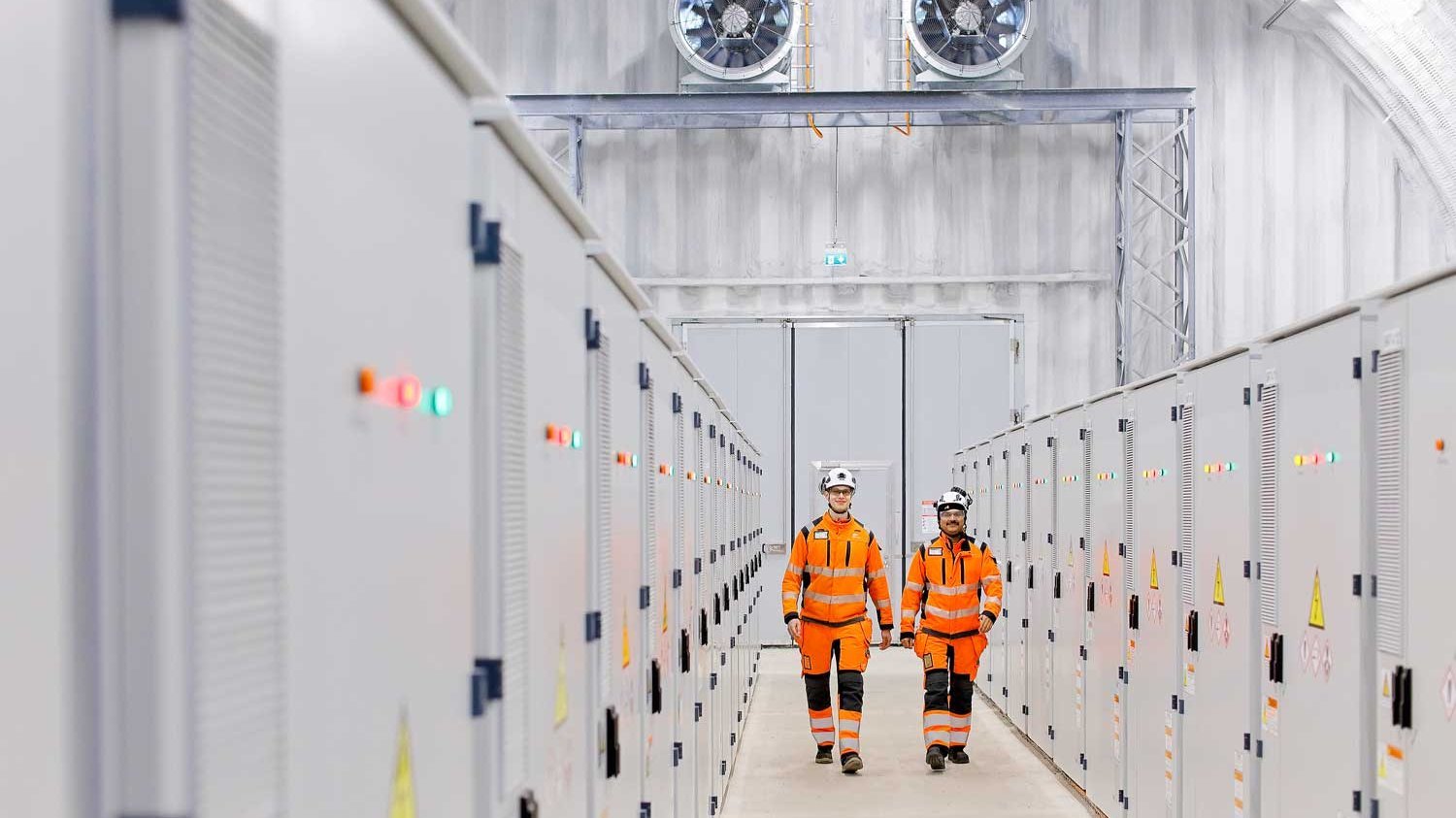
Alpiq successfully advanced the implementation of its sharpened strategy in 2025, with investments firmly focused on strengthening and growing flexibility across its asset base. The company completed and commissioned its first 30 MW / 36 MWh battery storage facility in Finland, progressed additional BESS projects – including a 125 MW installation in Haapajärvi (Finland) and a 100 MW unit in northern France – and secured a further 406 MW project pipeline in Germany.

In Switzerland, the modernisation of the Mottec hydropower plant was completed, and the phased overhaul of Bieudron – the country’s most powerful hydroelectric station – remains on track for completion in 2026. In Italy and Spain, targeted investments at San Severo and Plana del Vent increased efficiency and operational flexibility to support system needs. In Hungary, Alpiq advanced a new flexible power plant in Budapest that combines fast-starting gas engines with a battery system to support the grid more efficiently and with lower emissions, while also providing heat for the city.

Building on these developments in the Assets value chain, Alpiq also scaled its customer facing Origination activities by expanding its presence in core markets and exploring new opportunities in Europe. The focus was on structured energy products, innovative flexibility offerings such as BESS and demand side solutions, as well as power purchase agreements (PPAs) and customer platforms providing flexibility and intraday market access. Recent highlights include a long-term renewable PPA with Etex in France, the first tolling agreements to bring third-party BESS projects to market, and the launch of a real-time intraday pricing and one click trading platform – all of which help customers maintain operational continuity and optimise energy costs, even during periods of market volatility

Conducting a sustainable business remained central in 2025. Alpiq expanded its Double Materiality Assessment to ten topics, reduced Scope 1 emissions by 12% and Scope 2 emissions by 32% and continued progressing towards its net zero target for 2040. The company also advanced its social and governance commitments by pursuing its goal of 35% women in top management, recording zero work-related ill health cases or fatalities, strengthening supply chain due diligence processes, and once again receiving Great Place to Work certification in several countries.

Change in the Executive Board

After six years – including almost four years at the helm of the Business Division Trading – Navin Parasram will be leaving Alpiq. Antje Kanngiesser, CEO Alpiq says: “Navin joined Alpiq in 2020 during the Covid crisis initially as Head of Merchant Trading. In June 2022 he took over the Trading Division. Navin played a key role in helping the company navigate through the biggest energy crisis, setting our strategic direction and adding profound domain expertise.” Johannes Teyssen, Chairmen of Alpiq’s Board of Director: “I sincerely thank Navin for his dedication and contribution over the past six years at Alpiq.”

Morgane Trieu Cuot, the deputy head of Alpiq’s trading division and responsible manager of Alpiq’s successful Asset Trading businesses since September 2024, will assume the responsibilities as interim lead allowing the company the time to assess the future profile of this important role. Alpiq aspires to also grow profitable trading and origination activities in support of our ambitious growth strategy around the flexibility needs of the future decarbonized power systems.

Outlook

With most 2026 long energy positions already hedged, Alpiq enters the year with solid earnings visibility. The company expects to further grow in its flexibility portfolio – including the newly acquired 100 MW Cheviré BESS in France and various battery storage projects in various European countries – alongside continued investments in hydropower and other flexibility assets. For the next years, Alpiq is committed to significantly increasing investments in flexible assets up to CHF 1 billion per year, for profitable opportunities.

The company continues to actively promote the projects of the Swiss Hydropower Round Table, above all the Gornerli multi-purpose reservoir near Zermatt. The Gösgen nuclear power plant is expected to be reconnected to the grid on 21 March 2026. However, its outage is anticipated to have a negative impact on the annual results for 2026. Alpiq remains financially well positioned to fund growth organically, modernise its asset base and support its customers, while contributing reliably to a better climate and security of supply in Switzerland and across Europe.

About Alpiq

Alpiq is a leading Swiss energy services provider and electricity producer that operates throughout Europe. It offers its customers comprehensive and efficient services in the fields of energy generation and marketing as well as energy optimisation. Alpiq has been generating climate-friendly and sustainable electricity from renewable Swiss hydropower for more than 100 years. The portfolio also comprises shares in two Swiss nuclear power plants as well as flexible thermal power plants, wind farms, photovoltaic facilities and battery energy storage systems in Europe. The Alpiq Group has around 1,400 employees and is headquartered in Lausanne. Alpiq Holding Ltd. is a private stock corporation in majority private ownership. It is fully controlled by the three shareholder groups of Schweizer Kraftwerksbeteiligungs-AG (SKBAG), the Consortium of Swiss Minority Shareholders (KSM) and EOS Holding SA (EOS).

You can find more information on Alpiq at www.alpiq.com