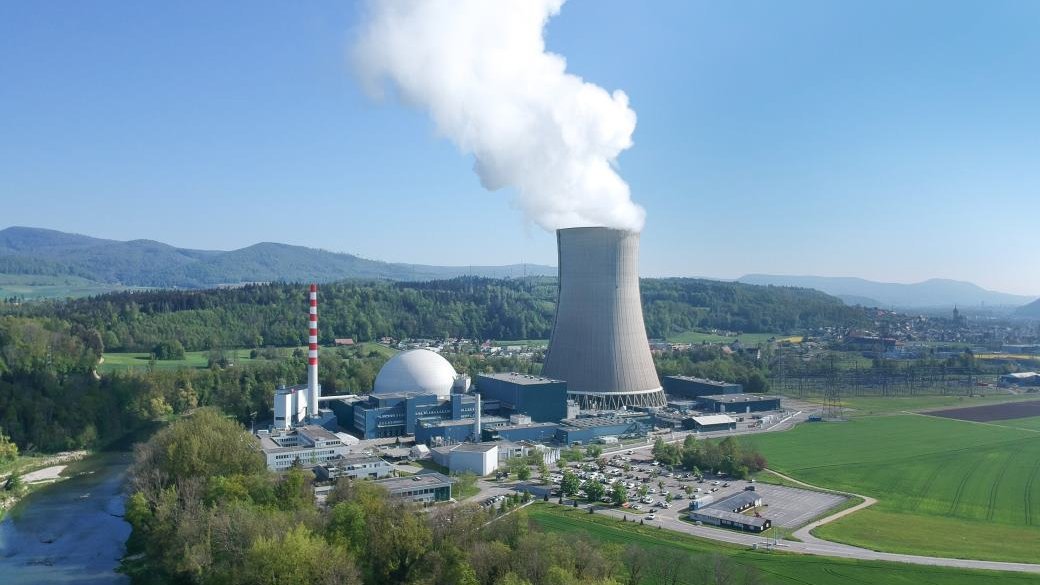
The Gösgen nuclear power plant (KKG) has been back in operation since 23 March 2026 following a prolonged and unplanned outage. In this interview, Alexander Puhrer, Head of the Nuclear Power Generation business unit at Alpiq and Managing Director of KKG, discusses the reasons behind the unplanned outage, the restart and the requirements for the plant’s long-term operation.
Alexander, KKG was recently reconnected to the grid following a 10-month shutdown – 9 months of which were unplanned. What were the reasons for the shutdown and what measures have been taken since?
First of all, I would like to extend my sincere thanks to all my colleagues who contributed to the restart of KKG. This shutdown represents an extraordinary and very challenging event for KKG and its shareholders, and it is thanks to the great motivation and expertise of the staff that the nuclear power plant is now back on line, supplying electricity to the Swiss grid.
Regarding the incident: KKG identified a potential design weakness that could lead to an overload of the feedwater system piping. This finding means that, in a very rare accident scenario involving a pipe rupture in the non-nuclear part of the plant, further damage to the system could occur. Consequently, the regulatory authority ENSI, the Swiss Federal Nuclear Safety Inspectorate, required extensive safety-related evidence to demonstrate that KKG meets the safety requirements. In addition to providing this evidence, KKG decided to implement further modernisation and upgrading measures in the feedwater system. In particular, the undamped check valves were replaced with damped check valves. This modernisation work has now been completed and the required safety verification has been provided.
What were the financial consequences of this prolonged, unplanned outage?
Alpiq is the largest shareholder of Kernkraftwerk Gösgen-Däniken AG, with a 40 per cent stake. The prolonged production outage amounts to more than CHF 500 million for all shareholders. Alpiq’s share is around CHF 200 million. This, of course, has a significant impact on our results.
What did Alpiq do to compensate the missing electricity production?
As a partner plant, KKG supplies its shareholders with electricity on a pro-rata basis, which they incorporate into their portfolio and market. Alpiq had to procure the missing volume of electricity on the market at current conditions in order to fulfil its contractual obligations towards its customers. A positive factor was the high availability of nuclear power plants in France – particularly during the winter. This was crucial for Switzerland, as it enabled additional energy imports. After all, KKG accounts for around 13% of Switzerland’s annual electricity production – and this has been missing from the electricity mix for the past 10 months. This case also highlights the value of European integration for Switzerland’s security of supply. Our Asset Trading division is networked across Europe, and this cross-border integration was crucial in minimising the impact of the prolonged outage. Having regulated access to the European electricity market – for example, through an electricity agreement with the EU – is not only economically sensible but essential for security of supply. Only as part of an integrated market can we operate our plants efficiently and effectively bridge supply gaps.

The long-term operation of existing power stations is of great importance for the electricity supply, particularly in winter.
Has the prolonged outage affected plans for the long-term operation of KKG? More broadly, what is needed to keep existing plants online for as long as possible?
Given the challenges facing the electricity supply, particularly in winter, the long-term operation of existing nuclear power plants is of great value and a high priority. Significant investments are required to ensure safe long-term operation, and these must be weighed against political, regulatory and economic risks. KKG has been in long-term operation for five years and has produced electricity reliably and with virtually no disruptions in recent years. The current plan for KKG is based on an operating life of 60 years. An analysis is currently underway to determine what would be required for potential long-term operation beyond 60 years. One thing we already know: from a technical and safety perspective, operation beyond 60 years is possible. We are now examining what this would entail from an economic and regulatory perspective. To ensure long-term operation, appropriate risk-mitigating framework conditions would need to be established, amongst other things.
How does the current debate on lifting the ban on the construction of new nuclear power plants relate to long-term operation, and what is Alpiq’s position on this?
Alpiq supports the approach of keeping all climate-neutral options open to ensure long-term security of supply. This includes lifting the ban on the construction of new nuclear power plants. We therefore advocate technological openness and thus the Federal Council’s indirect counter-proposal to the so-called ‘Blackout Initiative’. An open approach to technology is also important for the safe long-term operation of existing plants, given the need to secure skilled labour, expertise and supply chains. For Alpiq, the question of building new plants does not arise in the current environment and under the current regulatory framework.