Better climate

Glacier retreat: consequences for hydropower and beyond

05/13/2026, 08:00 | Better climate

More than 1,000 Swiss glaciers have disappeared over the last 30 years, with very tangible effects – particularly for electricity generation, local authorities, businesses and all those who depend on water in the Alpine region.

Anyone hiking in the Swiss Alps cannot fail to notice it: the glaciers are retreating. Where imposing masses of ice once stood, increasingly bare rock and large quantities of sediment are shaping the landscape. According to an international study covering the entire Alpine arc, only around 20 of the current 3,000 Alpine glaciers would remain by 2100 with a temperature rise of +4°C. The disappearance of the glaciers seems inevitable. The question now is how quickly this is happening and how we are going to prepare for it.

Tangible consequences for hydropower

For hydropower, which supplies around 60% of Switzerland’s electricity, the effects are very real. “Glaciers are natural water reservoirs. In winter, they store water in the form of ice. In spring and summer, they slowly release some of the stored water and, together with rainfall, feed into reservoirs in particular.” explains Marjorie Perroud, PhD in environmental science and Environmental Project Manager at Alpiq. This water is used to generate renewable energy.


A century’s perspective: on the left, the Gorner Glacier in 1931; on the right, in 2022

First more, then less: the paradox of melting ice

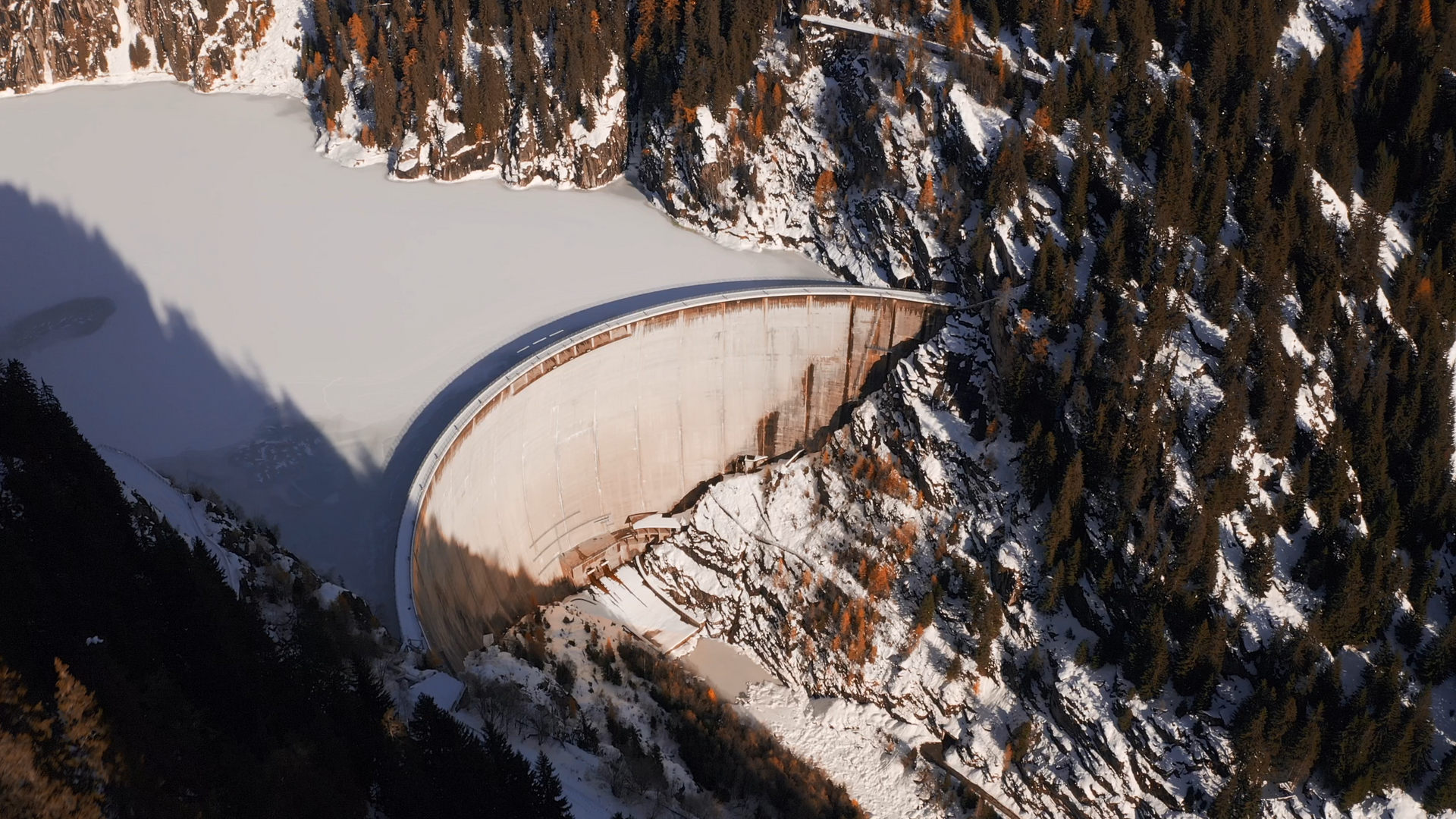
At first glance, the situation seems contradictory: as glaciers are melting rapidly, heavily glaciated catchment areas currently have far more water than when the large dams were built. “At the Gebidem dam, commissioned in 1969 in Valais, there is now so much water on certain days of the year that the lake overflows, as the facility was not designed for such a flow rate,” explains Marjorie Perroud. “This water is lost for electricity generation and its potential remains untapped.

This abundance is, however, deceptive. It results from the melting of reserves accumulated over millennia. Once the ice has disappeared, the volume of water will depend solely on rain and snow. “Forecasts indicate that in some catchment areas, water availability could decrease by 20 to 30 per cent by the end of the century.” says Marjorie Perroud.
 

Overflow at the Gebidem dam during a period of intense melting of the Aletsch Glacier

In Alpine regions: more water in spring, less in summer

At the same time, in high-altitude regions with glaciers, the period during which water is available will change : the peak will shift from summer to spring, as precipitation will fall more as rain than as snow, snowmelt will begin earlier and meltwater from glaciers will become scarcer. Climate models also predict a decrease in rainfall in summer and an increase in winter.
 

Climate change is forcing us to fundamentally rethink how we can adapt the operation of our hydropower plants to the hydrological conditions of the future.

Marjorie Perroud, Environmental Project Manager at Alpiq

Protecting facilities from sediment

Added to this is another challenge: rising temperatures lead to increased erosion. Melting glaciers release previously trapped material, thawing permafrost destabilises slopes, and, with increased flow rates, water carries more sediment. This accumulates in reservoirs, reducing usable volume and accelerating wear and tear on facilities. Alpiq is responding with various measures and is studying sediment trends and their long-term effects on infrastructure. “For each site, we are implementing a tailor-made, environmentally friendly strategy to maintain energy efficiency whilst providing long-term protection for infrastructure,” explains Marjorie Perroud  .

How Alpiq is addressing these changes

Climate change is making hydropower generation more complex. For over 15 years, Alpiq has been collaborating with universities and specialist firms to model glacier retreat, long-term hydrology and changes in sediment volumes, with the aim of predicting as accurately as possible the impacts of glacier retreat on hydropower. Analysts and meteorologists continuously monitor hydrological changes in catchment areas, refine the models and derive operational recommendations from them.

Despite all the uncertainties inherent in the models, two trends are emerging: in glacier-rich catchments, flow could continue to increase for another two to three decades before declining. In catchments where the glacial component is smaller, peak water availability has already been reached or is about to be reached; here, water availability already depends almost exclusively on precipitation, such as rain and snow.

In catchment areas where water volumes are increasing, adapting hydropower facilities can help make better use of this surplus for the generation of renewable electricity. For example, by optimising generation equipment, raising dams – such as the one at Moiry in the Val d’Anniviers, in the canton of Valais (planned) – or building new facilities, such as the multi-purpose reservoir ‘ Gornerli  ’ that Alpiq and Grande Dixence plan to construct above Zermatt. 

We cannot eliminate uncertainty, but we can learn to manage it better. Our models help us set our priorities: where should we invest today to continue generating sustainable electricity from hydropower in the future?

Marjorie Perroud, Head of Environmental Projects at Alpiq

Hydropower, part of the solution

More renewable energy means less dependence on fossil fuels

The challenges are very real, but hydropower is not merely affected by climate change; it also plays an active role in combating it. Every kilowatt-hour generated from renewable hydropower replaces fossil fuels, such as gas or coal. Less fossil fuel means lower CO₂ emissions. Hydropower must adapt to climate change, but at the same time it is an essential tool for mitigating it.

“By planning early, we can act with foresight”

The melting of glaciers is no longer an abstract future scenario. It is already changing the amount of water flowing through the Alps. Marjorie Perroud, Environmental Project Manager at Alpiq, explains why this does not only affect energy producers, what local authorities and businesses can do right now, and why hydropower plants play a key role in this.

Climate change is altering water availability in the Alps. Who is affected, apart from energy producers?

In fact, all water users in the Alpine region. Local authorities that source their drinking water from Alpine springs. Farms that rely on irrigation. Tourism companies that create artificial snow or use mountain streams to promote nature-based experiences. And regions that need to better protect themselves against flooding and mudslides, as heavy rainfall is becoming more frequent.

How urgent is it to act? We’re talking about changes that will unfold over decades...

The water flows we currently experience could change profoundly by 2050 – in terms of quantity, timing  , and intensity. Those who depend on water would be well advised to start looking into the evolution of their catchment area today. Because planning early allows for proactive action, rather than having to react later.

What can local authorities and businesses actually do? Do they really have any room for manoeuvre?

Yes, and this is precisely where the opportunity for multifunctionality lies: hydropower facilities do not merely generate electricity. They are infrastructures capable of storing, regulating, distributing and protecting water – and doing so for multiple purposes simultaneously. Reservoirs that currently store water to generate electricity could also, in the future, ensure a supply of drinking water, mitigate flooding or enable irrigation.

What is the prerequisite for this multi-purpose use to work?

It only works if the various needs are coordinated at a very early stage between energy producers, the federal government, cantons, municipalities and other users. A shared vision of water resources is required. The water supply forecasts enable us to gain an overall picture and set priorities.

Does the disappearance of glaciers worry you personally, or are you fairly confident?

Both. The disappearance of the glaciers seems, unfortunately, inevitable at this stage. But how Switzerland deals with this – whether proactively or reactively – depends on us. And in that regard, I remain confident when I see the expertise and commitment demonstrated by this sector.
 

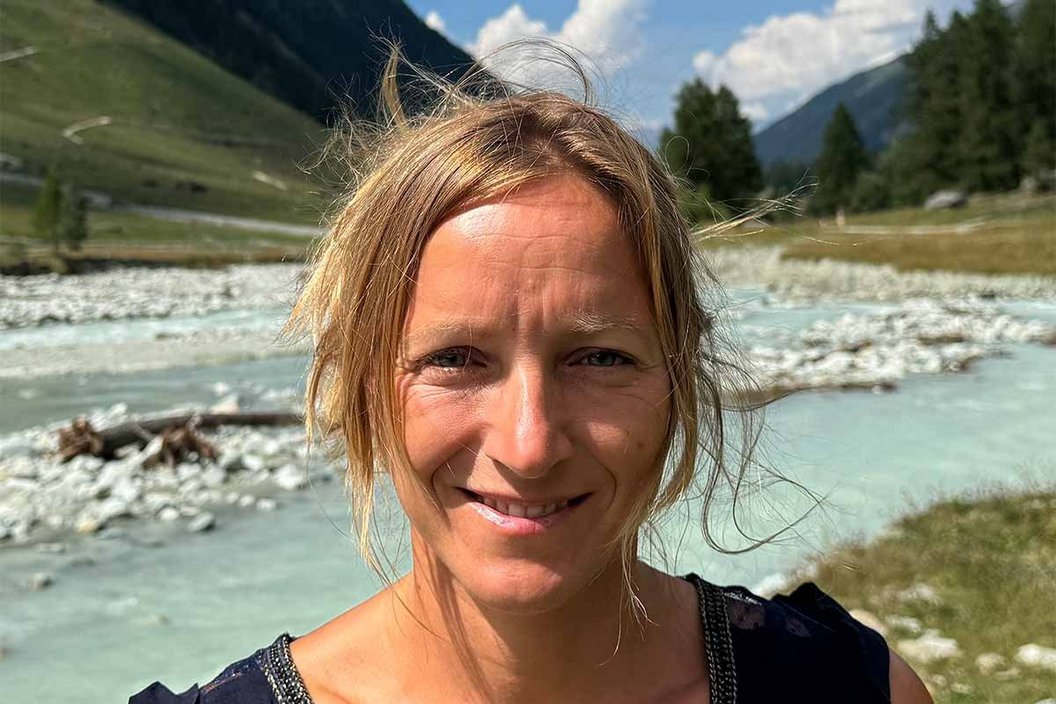
Marjorie Perroud

Marjorie Perroud has been Environmental Project Manager at Alpiq since 2019. She holds a PhD in Environmental Sciences and has completed two post-doctoral fellowships in the US and Canada in the fields of climatology, glaciology and limnology.

Do you have a project promoting sustainable water management in Valais? Enter the #prixalpiq

In partnership with the Association of Concessionary Municipalities of Valais (ACC), Alpiq has launched the sixth edition of the #prixalpiq.
This competition encourages the development of concrete projects promoting sustainable water management in Valais, particularly in the fields of agriculture, the environment, energy, tourism and culture. Prizes worth a total of CHF 50,000 are up for grabs.

Submit your project by 15 September 2026! Find out more on the #prixalpiq 

Link to Website