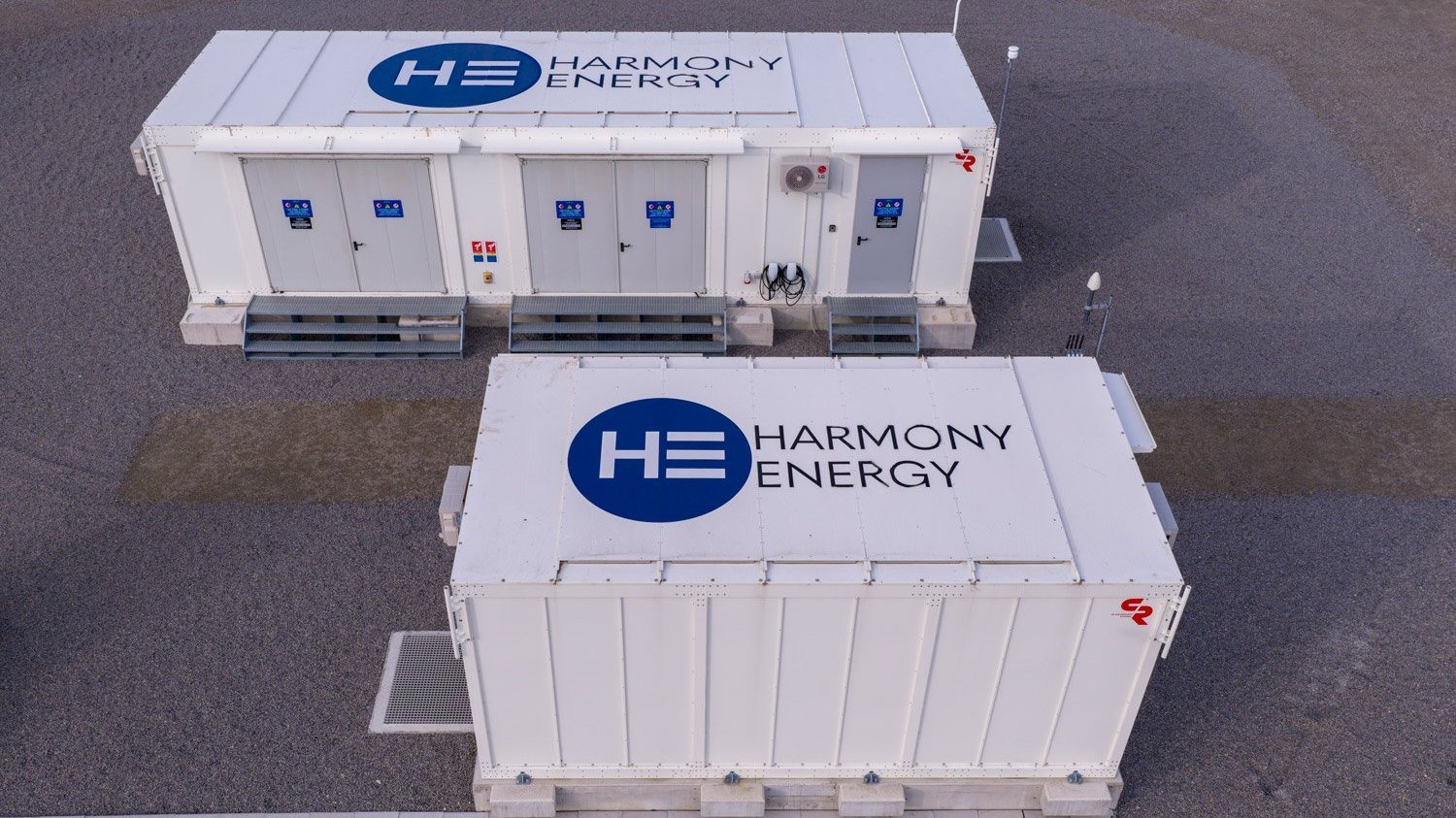
A conversation with Christoph Bellin, Head BESS at Alpiq and Chief Integration Officer at Harmony Energy, and Peter Kavanagh, CEO of Harmony Energy.
Alpiq’s acquisition of a 90% stake in Harmony Energy in July 2026 marks one of the largest strategic moves in the company’s recent history. Combining Harmony Energy’s extensive battery development pipeline with Alpiq’s expertise in energy markets and flexibility solutions creates a powerful partnership. The two companies are combining their strengths to accelerate the deployment of battery energy storage systems (BESS) across Europe. In this joint interview, Christoph Bellin and Peter Kavanagh discuss how the integration is progressing, where they are already creating value together, and how they plan to build one of Europe’s leading battery storage platforms to support a more flexible and resilient energy system.

Our ambition is clear: we want to build one of Europe’s leading battery storage platforms.
It has now been several months since Alpiq acquired a majority stake in Harmony Energy. Looking back, what has impressed you most about the partnership so far?
Christoph Bellin: What has impressed me most is how quickly the teams have come together. From day one, there has been a strong sense of mutual respect and a shared understanding of the opportunity ahead of us. Alpiq brings decades of expertise in European energy markets, flexibility optimisation and asset management, while Harmony Energy contributes an exceptional track record in developing and delivering large-scale battery projects. Those capabilities complement each other remarkably well.
Peter Kavanagh: I would agree. What stands out is how closely our ambitions are aligned. Both organisations recognise that battery storage will play a critical role in the future energy system, and we share the determination to lead that transformation. Despite coming from different backgrounds, we have discovered that our cultures are surprisingly similar: entrepreneurial, pragmatic and focused on delivering results.
Christoph, you described the acquisition as “probably the deal of your lifetime”. Why is this transaction such a milestone for Alpiq?
Christoph Bellin: Because it fundamentally changes our position in the European battery storage market. It is a strategic fit. Before the acquisition, Alpiq had already developed strong capabilities in flexibility solutions and energy trading. By bringing Harmony Energy into the Group, we immediately add a multi-gigawatt project pipeline, around 400 MW of battery assets currently under construction and more than 700 MW of battery storage projects already delivered across Europe. That scale accelerates our ambitions by several years and gives us a platform to become one of Europe’s leading BESS players. For us, this is not only an acquisition; it’s a transformational step in executing Alpiq’s flexibility strategy.

Both organisations recognise that battery storage will play a critical role in the future energy system.
Peter, what does joining Alpiq allow Harmony Energy to do that would have been difficult before?
Peter Kavanagh: The biggest difference is that we can now think much more long term. Historically, we had to sell some projects at the ready-to-build stage to finance further growth. Thanks to Alpiq’s investment and long-term commitment, we now have the financial strength to develop, construct, own and operate a much larger share of our projects ourselves. We already have a strong pipeline in every country we operate in, and the team is excited that we now have the backing to own and operate more of these projects over the much longer term.
Integration is often where acquisitions succeed or fail. What has been your focus during the first few months following the transaction?
Christoph Bellin: Our objective was very clear from day one: combine capabilities without losing what makes Harmony Energy successful. Harmony continues to operate under its own name and with its existing management team. We are creating stronger links between teams wherever there are immediate benefits and synergies, for example in BESS procurement. My role as Chief Integration Officer is to ensure that we leverage the strengths of both organisations while preserving Harmony’s entrepreneurial culture and speed of execution. What has impressed me most is how naturally the teams have collaborated. There is strong alignment around our shared ambition and the opportunities ahead.
Peter Kavanagh: From Harmony‘s perspective, the integration has been very pragmatic. We have gained direct access to Alpiq’s expertise while maintaining the autonomy that enabled us to become one of Europe’s leading battery developers. That combination is proving extremely valuable.
Can you already point to concrete examples of where the combination of Alpiq and Harmony Energy is creating additional value?
Peter Kavanagh: A good example is Germany. We currently have a development pipeline of around 5 GW there, making it one of our most important growth markets. Alpiq’s market expertise helps us evaluate different revenue models, better assess commercial revenue structures, risk and potential, and optimise projects throughout their operational lives. We are also preparing to appoint Engineering, Procurement and Construction (EPC) contractors for further German projects, including large-scale developments that could play an important role in providing grid flexibility.
Christoph Bellin: We also see added value in our ability to make decisions quickly and press ahead with the financing of further projects. Since the transaction was completed, we have taken the final investment decision on two further BESS projects in the UK – Bramham and Castleford. These projects are set to enter the construction phase shortly and are a good example of how we are turning our shared commitment into action.
Europe’s energy system is changing rapidly. Why are batteries becoming so important? And where do you see the greatest opportunities for battery storage over the next few years?
Peter Kavanagh: As Europe continues to increase the share of renewable generation in its energy mix, the need for flexibility grows significantly. Solar and wind power are essential for decarbonisation, but they also introduce greater variability into the system. Battery storage helps bridge that gap by absorbing electricity when supply exceeds demand and releasing it when the system needs it most.
When it comes to opportunities, Germany is certainly one of the most exciting markets. We moved into the market early because we recognised the long-term opportunity and wanted to secure grid connections before queues became longer. Today, Germany benefits from substantial renewable energy deployment and increasingly attractive conditions for large-scale batteries. We also continue to see strong opportunities in the UK, France and Poland as flexibility requirements grow. The UK is a well-established market for us, while in France the first asset we commissioned is performing exceptionally well.
Christoph Bellin: Flexibility is becoming one of the defining success factors of the energy transition. At a broader level, the opportunity is driven by a simple reality: Europe needs more flexibility. Solar and wind generation continue to grow rapidly, but flexibility resources must grow alongside them. Batteries can respond within seconds, supporting grid stability and helping to integrate increasing volumes of renewable energy. We see this across all our markets.
What are your shared ambitions for the coming years?
Christoph Bellin: Our ambition is clear: we want to build one of Europe’s leading battery storage platforms. We have a strong project pipeline, attractive market opportunities and the capabilities required to scale successfully. We are focused on sustainable growth while creating long-term value for customers, partners and the wider energy system.
Peter Kavanagh: Scale matters, but quality matters just as much. Harmony Energy currently has a pipeline of around 12 GW. We want to be recognised not only for the size of our portfolio but also for the quality of our projects, our partnerships and our operational excellence. By combining Harmony Energy’s development expertise with Alpiq’s energy market capabilities, we are exceptionally well positioned to play a leading role in Europe’s transition towards a more flexible, low-carbon energy system.
Finally, if you had to summarise the future of the partnership in one sentence, what would it be?
Peter Kavanagh: Together, we are creating a platform that can accelerate the deployment of battery storage at the scale required for Europe’s energy transition.
Christoph Bellin: And by combining our complementary strengths, we are helping build a more resilient, flexible and sustainable European electricity system for the future.